Visit MiniLifeHacks.com

Visit www.MiniLifeHacks.com for more articles!

Thursday, July 29, 2010

Mind Mapping for a Better Life

View article at MiniLifeHacks.com

What is Mind Mapping?

Mind mapping is a method for organizing thoughts that can be used to improve the way you think about your life, tasks, workflow and even how you relax.  It helps categorize and associate different thoughts with one another and makes it easier to memorize and recall complex thought structures.  Mind mapping in some form was originally conceived and used by Leonardo DaVinci but is commonly used by thousands of people today.  I was introduced to it from the book How to Think Like Leonardo DaVinci by Michael Gelb.  From a very broad level, mind mapping starts with one thought or concept and allows you to create a physical map of other associated thoughts.  Very little structure is given to how the actual mind map is formed giving your mind creative freedom, and it is encouraged to let your mind wander within reason and record how it wanders.

Vacation Mind Map

How can Mind Mapping Help Me Live a Better Life? 

By organizing your thoughts in a mind map you are able to gain a better understanding of how your mind works and look at the big picture of:
  1. how certain things in your life effect other things,
  2. why certain thought patterns may arise,
  3. what to do to short-circuit thought patterns,
  4. how to memorize different associations between thoughts
  5. how to anticipate thoughts before they arise by understanding how your brain works. 
All of the above are very powerful big-picture tools to use in every facet of your life.  Other benefits of mind mapping, that will help you live a better life on a more detailed level are:
  1. realizing different methods of achieving short-term goals,
  2. laying out the direct and indirect benefits of performing certain tasks,
  3. visualizing the interconnections of many thoughts and ideas,
  4. creating representative imagery that will be easy to associate with later,
  5. realizing how you can accomplish multiple goals with one activity or at least how you can combine short-term goals.

Why is Mind Mapping so Effective? 

Mind mapping combines thinking strategies of both right-brained and left-brained thinkers.  This makes mind mapping easy to conceptualize for both types of thinkers, but more importantly, by combining these right and left-brained strategies we’re able to unleash our mind’s full creative and conceptual potential.

How to Create a Mind Map

Getting Started

It’s best to create a mind map with a pen or pencil on a large piece of paper.  Start with one word that represents a thought, goal, idea, problem, etc.  If you need more than one word that’s okay, but try to keep it VERY simple.  Write this word in the middle of the paper and create a quick doodle or symbolic graphic that represents your central word.  It’s great to use colors and be as creative and vivid as you can, this will help with recollection later, and will also help to unleash the creative prowess not generally used when planning or organizing.  Next, write down associated words around the center word and connect them to create appropriate associations.  Continue using color and creating symbolic graphics for each word.  Outside of those words create more words and associate them appropriately.  Soon, you will see a complex network of associations all related to your central word.

Expanding the Map

This network of relationships is your mind map for this particular topic.  You can expand on it infinitely so be careful not to stray too far from the intended relevancy.  Once you have added a good deal of content to your map take a step back and look at the big picture.  Look at all of the tiers you have most likely created.  Try to look at each word on its own and determine whether it can be associated with anything else on the map.  Create lines between all associated content, and if lines are not practical, use graphical indicators or numbers to indicate a connection between two things.  Eliminating the need for tiers of information that only have one “parent” is one of the main principles of the mind map.

Direction

Don’t focus on one word at a time when you are making the map.  Keep looking at the big picture and come up with any word that is associated with any other word in the map.  Jumping around from place to place will keep all of the words fresh in your mind and will make associations easier.  If you see your mind map taking on a different direction, think about taking one of the words from your map and creating a new map with that word as the base word.  This can be done for any word.

Conclusions

Look at the mind map and try to determine the various paths through which any two things are related.  How are they related?  Which other items do the relationships pass through?  Are there multiple thought processes, ideas or tasks that lead to the same outcome?  Is one path shorter than the other?  Is one path more important than the other?  Does one path address more elements than the other?

Examples of Mind Mapping for a Better Life

Vacation Mind Map

Create a mind map about all things related to a day off, or a vacation.  This can help you prioritize your next vacation plans.  It can also give you insight into how you can accomplish multiple things at one time thereby making your vacation time more effective.

House Work Mind Map

This mind map will most likely start with items like “Cleaning”, “Maintenance”, “Organization”, “Projects” etc..  this map will help you realize how these things are interconnected (ie. Cleaning & maintenance might have many interconnections) and will help you to better optimize your efforts around the house.

Shopping Mind Map

Creating a shopping mind map may be a little bit large, so it might be better to start with “clothes shopping” or “consumables”.  Organize these mind maps, not by individual item, to avoid over-complication, but by category or other properties.  For instance, consumables could be interconnected by timeframes like “daily”, “weekly”, “annually”, or by importance like “critical”, “needs”, and “wants”.

Health Mind Map

A health-oriented mind map could help to align and associate different critical elements of your health, such as diet, exercise, anxiety level, enrichment, etc.

Work-Life Balance Mind Map

Create a “work-life balance mind map” that helps you to organize your short term and long term goals, your time, and other important criteria between your work life and your social life.  By creating these interconnections between these two large facets of your life you will start to realize how, or if, your goals are in line with both of these areas.  You will also be able to visually see how compartmentalized your life may be in these different areas, what is contributing to its compartmentalization, and new methods of improving the effectiveness of your pursuit of happiness in any faculty.

Problem Statement Mind Map

If you have an obstacle you’re struggling to overcome, put a very simple problem statement in the center of a mind map and write down all associated items.  Other similar problems, similar solutions, tools that might be helpful, methods of solving problems… etc.  Get creative.  These associations will inevitably lead to a new solution.

My “Vacation” Mind-Map Example

Above is an example of a mind map that I created the other day when sitting at the lake.  I didn't have a large peice of paper or colored pencils so it's not as extravagant as it could be, but it gets the job done.  If you read through it, starting with "Vacation" in the middle, you can see that I've used "Play" "Accomplish" and "Explore" as some of my subcategories.  If I were to re-draw it, I would probably lump "Beach" and "Sun" into one "Relax" subcategory.
As I drew the map, the evolution surprised me more than once, in that the ends of the branches linked up to one another, creating a "bridge" of sorts between two subcategories.  It was interesting to look at these "bridging" elements from both different perspectives.  For example, the branch:  "Accomplish > Housework > Improve > Landscaping" leads to the same place as "Sun(Relax) > Outside > Landscaping".  This tells me a few things...
  1. First, it means I must enjoy landscaping. 
  2. Second, if I find myself landscaping, I can be aware of the fact that I am both, accomplishing housework, as well as relaxing.
  3. Also, if it is Saturday afternoon and I know I should be doing housework, but I'd really rather be relaxing, this is something I could consider doing in order to cover both bases.
These bridging elements occured in several places on my mind map and are indicated by a number in a square.  Some other bridges are:
  1. "Play > Kung-Fu > Practice > Workout > Dynamic > Games" and "Sun(Relax) > Frisbee"
  2. "Explore" and "Sun(Relax) > Outside"
  3. "Explore > Nature > Swimming / Kayaking" and "Play > Kung-Fu > Practice > Workout > Dynamic > Swim/Kayak"
Imagine if the mind map had been any bigger!  And this exercise probably took about 30 minutes to complete with all the doodles.  Not very long, and creating the mind map in itself was quite relaxing as well. (doodling has always been relaxing to me)
For me, creating a mind map was very eye-opening and I’m excited to explore more maps to re-create the important parts of my mental structure in a form that I can see and comprehend.  I also plan to use mind maps as a tool at work or around the house for organizing workflow and chores. 
Give it a try and let me know what you think!  Is this a tool you can see yourself using?

Leia Mais…

Thursday, July 15, 2010

How to Bring Awareness Back to Simple Tasks

Tea (1)Image via Wikipedia
Life is an incredible platform for existence. Every day we meander through our lives at slower or faster paces performing hundreds, even thousands, of tasks that are completely second nature to us and require no conscious thought. This is an incredible capacity and should be wholly appreciated.
People who teach meditation and life improving techniques often discuss awareness. Practitioners are encouraged to meditate on their breathing, their sitting, their walking, their immediate physical surroundings, etc. These awareness meditations can have a profound mental, physical and spiritual effect on a practitioner. However, it can be difficult to comprehend the intention of these exercises. It’s a foreign, ambiguous concept for most people to “be fully aware” and I think it is often misunderstood or misconstrued.

Reduce the learned simplicity of tasks

Here’s a different method to raise your awareness in a more physical, understandable way. Take for example talking on the phone, flipping a light switch, handing someone money, drinking tea, using utensils… etc. These are tasks that you’re probably not very well aware of because you learned to do them at such a young age and have become complacent in doing them.
Today try performing all of these simple tasks with your left hand. Performing these tasks with the left hand will bring you back to the time of your youth when you were still learning coordination and everything was a new experience. Things like dialing the phone, eating, and using a computer mouse took more concentration on the task at hand and, therefore, gave you more awareness of what you were doing. Try this and let me know how it feels!

Leia Mais…

Sunday, June 27, 2010

Wording Questions Differently to Avoid Complacent Responses

How was your day?
What did you do today? 
What was your favorite part of today? 
Were time and life both pleasant in their passing today? 
How exciting were the events in your life today? 
Was your day as awesome as mine was?
Asking the above questions all basically have the same intention, it's an inquiry about someone's day.  But they elicit completely different answers and more critical thinking on the part of the responder.  “How was your day?” is such a commonplace question that not much thought really goes into answering it, and there’s a good likelihood that you will get a pretty quick, pretty generic answer.  Whereas if you were to offer a more thought provoking question, the answer might take a few more seconds and might be a bit more pensive.  Trust me, you will get some strange looks from time to time, but someone having been asked a question will generally try to give an answer.
Another benefit of asking generally unasked questions is that you can come across as asking about someone’s day while implying that something positive should be included in the answer.  For instance, “Was your day as good as mine?” is infinitely more positive and healthy to ask than “Did your day suck as much as mine?”  Essentially it is the same question, but the implication is very different.  Each question exudes a feeling of positivity or negativity, respectively and gets the answering party thinking in one direction or another. 
This is also a great way to test your vocabulary and grammar skills.  By conjugating sentences that are carefully crafted to elicit certain responses, the questioner must be more diligent about wording.
What are some questions you can use to replace the commonplace everyday questions you might use now?

Leia Mais…

Friday, May 14, 2010

10 Questions you can ask to Get to Know Yourself

Getting to know yourself is a major turning point on the way to truly enjoying your life. In order to understand the world around you, you must first understand yourself and how you react to stimuli in any given situation.  Physical awareness is the very first step to take on the road to full awareness of mind and body.  Mental and spiritual awareness would follow, but for now let's just focus on the body.  This helps us to realize what we can and can't do and also how others perceive us. Here is a short list of 10 questions that will, if you take the time to honestly consider them, will help you to better understand yourself and become more physically aware.

  1. What is the distance from the tip of my thumb to the tip of my little finger when my hand is outstretched?  (This can be very useful when taking quick measurements of objects around the house.)
  2. What does my normal sitting posture look like?  What would I need to do to improve it?
  3. What is my average reflex time? (Take this online test)  Is it above or below average?
  4. What is the speed of my resting heartbeat?
  5. What is the duration of one full breath?  How does it change depending on my mood or activity?
  6. How much weight can I lift without injuring myself?
  7. When standing or sitting, is my center of gravity perfectly centered over my feet or chair?  Is my weight naturally shifted?  This could mean issues with your posture.
  8. How high can I jump?  How far can I jump?
  9. How long is my normal walking stride?  This will increase accuracy when pacing off distances.
  10. What volume of food is comfortable for me to eat and not be stuffed, or left hungry?
Feel free to add your own questions to the comments.

Leia Mais…

Sunday, October 11, 2009

Improve your Eyesight Natrually with Simple Shaolin Exercises

Shaolin Kung Fu
In ancient China, Shaolin monks developed a fighting style based on the physical characteristics and iconic elements of the personality of the Tiger.  They called this Tiger style Kung-Fu.  Since a Tiger has very keen eyesight, the monks developed methods of exercising their eyes to improve thier eyesight.  These would have been exercises that they trained and developed from a very young age.  They would have been performed by eveyone training in the Tiger style regardless of whether they had so-called "20/20 vision".  No matter how good you are at something, you can aways become better with more training.

I have been recently practicing the following exercises and have noticed an improvement in my eyesight over just the past couple months.

One exercise was to count the leaves on a far away tree.  With meditative patience they would focus in and count hundreds of leaves at a time.  (This is a good one to practice in the fall since the leaves are changing colors and you may be staring at leaves quite a bit anyway.)  Start up close with some leaves that are easy to make out and count 50 of them.  With patience, slowly pick trees that are farther away from you and then slowly increase the number of leaves you count.  Work your way up to 200 which will give you a good amount of time with your eyes focused at a distance.  Do this once daily.

Another exercise is to focus on an object very close to your face.  I usually choose my hand.  Get it as close to your eyes as you can while retaining a good focus on it.  Look at it for about 2-3 seconds after you've fully adjusted your focus on it, and then pick another object that is more than 20 feet away.  I generally pick a leaf on a tree or something else that has some fine detail that will allow me to really focus on finer and finer detail.  If you pick a flatt wall or something that doesn't have much texture or detail it will be hard to focus on.  Again, look at the object for 2-3 seconds after you have achieved a good focus.  Go back and forth between these two objects about 20 times and do this exercise daily.

Leia Mais…

Thursday, October 8, 2009

Pain is Only What you Make It - The Original Tale

Reference previous post: The Pain is Only What you Make It - Mind over Matter

With every impact, blood seeped out of my aching knuckles as I struck the wall-mounted training pad over …and over …and over again. Right, left, right left, right, left… My senior instructor, in his naturally menacing manner bellowed, “Punch harder!! I better feel the building shake! The pain is only what you make it.” as he walked out of the dojo and went upstairs to eat his lunch…

There were two of us testing for our black belts that day and we both took a healthy breath, focused in a little closer to our targets …and we punched harder. As our fists throbbed and knuckles stung, his words resounded in ears, and we persevered. My mind sunk into contemplation and became detached from my current situation. After many years of martial arts training, I knew the capabilities of my body, and I knew how it would react to certain types of damage. “They’re only knuckles. They’ll lose their skin and bleed. Since I’m human I know they’ll heal.”

“If the pain is only what I make it, then the fact that I’m stuck in this situation is unimportant.”
Physical pain is only a response to outside stimuli, and it tells a brain that there may be damage occurring at a certain location on the body. Essentially, it’s an electrical memo sent from your nerve endings to your brain and can be thought of as merely a form of communication. Well, if you are already aware of what is happening with your body, then you have no reason to read the memo. You have the option to disregard the memo in order to more effectively get your task done. Of course, the same philosophy can be applied to more than just the physical sort of pain or suffering.
“I know that I am in pain now, but I know that some time in the future I will no longer be in pain.”
Knowing that pain is temporary is also helpful. When you begin to realize that the climate of life is always changing, then you will always be prepared to embrace the approaching climate, be it painful or joyful. If this is the case, what difference does it make that there is pain now?

Leia Mais…

Friday, September 4, 2009

One Second Meditation Practice. A Moment of Clarity.

Twitter 365 - Ft Yotsuba [079]Image by KayVee.INC via Flickr

One-hour meditation too much to handle? 20 minutes? 5 minutes got you beat? Here's a new approach to meditation with one very westernized quality about it. It's very fast.

This method is less focused on meditation, but more about trying to sit peacefully and achieve a brief moment of clarity, or clarity of presence. This way of thinking comes from Zen philosophy. The idea here is to create an instantaneous state of mind, or state of being wherein your awareness or understanding of your immediate surroundings or situation is increased. Try not to exert effort when attempting this. It will inevitably lead to failure and regret. Failure to do something that you didn’t “try” to do, is not really a failure. If you want it to be a sunny day and it turns out rainy, you did not fail. If it rains, it rains; if it’s sunny, it’s sunny.

Hints to help you achieve a moment of clarity:

  1. Focus on your heartbeat until you can feel it pushing the blood throughout all of your arteries.
  2. Create a phrase or sentence that describes what it feels like to be alive.
  3. Look at your hand and try to understand that no matter what happens in this life, all that's sure is that you will have this body.
  4. Picture yourself from a bird's eye view. Visualize whatever you're doing at the moment and zoom out little by little to picture the room, building, trees, street, town, state, country, continent, planet, galaxy, and all of the cosmos.
  5. Imagine you have just been born and are seeing all of the things around you for the first time.
  6. Do not concentrate, just pay attention.
  7. Do something you absolutely love doing. Something that engages your mind and body 100%.
  8. Rise to a challenge that is slightly more than you think you are capable of.
  9. Breathe silently and listen to the other sounds your body may be making.
  10. Focus on your skin until it begins to tingle.
Have a nice day!

Leia Mais…

Wednesday, July 1, 2009

How to Prioritize when Prioritizing is not a Priority

Everyone has something that they want to accomplish or get better at or do more often, and no matter how much we think about it, it just keeps slipping by. Another opportunity to eat healthier or practice a certain piano piece, etc. is trumped by other priorities, other obligations.

Accept that this will happen.

You have priorities. Everyone does, and always will, that’s just part of human nature. Priorities that are higher on the list get done before those that are lower. Sometimes you have control over the priorities list and sometimes you don’t. Priorities come bundled with an inherent level of importance depending on your lifestyle and the elements you cherish.

Increasing the importance of a priority.

If you have something in mind that you have wanted to undertake, but have not been able to find the time for it, there is a way to increase the importance. Generally speaking the items that are a "bigger" part of your life get more attention - the house, kids, job, etc. So with this philosophy, if you make something a larger part of your life, it will inherently become more of a priority.

Make your priorities a hobby!

If you make something a hobby it will become more important to you because of the fact that it has become a larger part of your life. My wife recently became fascinated with eating healthy. She fed that fascination by learning about food from the bottom up. She studied hundreds of healthy foods, read books, blogs, labels and talked to other people with similar minds. She became immersed in this knowledge and has gained an invaluable understanding of what is healthy and why . She made this lower-level priority into a hobby that expanded and consumed spare moments that would otherwise have been used doing other things. Her other priorities didn’t necessarily have to wane to make room for it, but they were simply rearranged to accomodate for it.

Leia Mais…

Wednesday, March 25, 2009

Let Today be Forever Known as the "Inspiration Age"

Sunset-birds
I woke up this morning and the words "Inspiration Age" were ringing in my head. Not sure why, but when I got to thinking about it, akin to the industrial revolution of the 18th & 19th centuries or the Space Age which began in the 50's, it does stand to reason that the first part of the 2000's will forever be remembered as the "Inspiration Age".

Our world is on an extremely fast and volatile evolutionary path, and wherever we end up 50 years from now, what we do TODAY will have been the inspiration that crafted it.

In this article I've listed what I believe to be the major contributors to today's inspiration.

"Go Green"

Of course today's buzzword is "Green". This is getting engineers optimizing existing products and creating new technologies across the board as well as take a closer look at the entire Earth, its processes and their interrelations as a system. But this inspiration is not just limited to engineers, everyone conscientious enough is taking a fresh look at their daily life and coming up with new ways to optimize it that would have less of an environmental impact.

Budding New Technologies

So many technologies are in their infancy right now and there is much more research and learning being done than actual development or commercialization in the fields of cloning, consumer space flight, nano-technology, thought controlled devices and many more.

Revolutions in personal communication devices present an interesting topic for inspiration as well. New developments in everyday devices are revolutionizing how we go about our lives. What this means to me is the combination of all of our cool new gadgets into one tiny little device: Phone, Camera, PDA, Music player, and any other form of communication available “out there”. This has been on the horizon and greatly anticipated ever since cell phones started taking pictures and on the forefront of this effort is the iPhone which has been the first to really nail this. (it sounds to me like everything else pales in comparison – sorry Blackberry users). All of you people (myself included) who have been expecting this product for some time now, have provided a great deal of inspiration and motivation for product development engineers. Thanks everyone! From all of us.

These devices allow creative minds to focus on creativity, drawing inspiration and creating inspiration rather than organization of thoughts or communication.

Life Hackers

There seems to be a large presence of people out there who have become very interested in optimizing every facet of life. Relationships, chores, work, parenting, making money… or just day-to-day tasks - hence the creation of this blog. ☺ I think this is a fascinating concept and, like the convenient devices discussed above, the idea is that if you can optimize certain tasks so that you don’t need to spend as much doing them, you have more time to spend focusing on the more enjoyable things in life. Enjoyable things inherently offer more inspiration to people because you can generally allow yourself to contribute 100% of your focus to these things. If you are attempting to enjoy something against your natural instinct you most likely won’t allow yourself to be completely immersed in it.

Another benefit to "life hacking" is that it offers an entirely new subject to scrutinize – The optimization of life itself. This is completely new and very creative in itself. It provides inspiration for the scrutinization of a vast number of other subjects that we currently take for granted or accept for what they are.

"Millennials"

Otherwise known as the Net Generation, Generation Y, Echo Boomers, and iGeneration, Millenials are basically the generation following the baby boomers. Many business owners are afraid of Millennials because they are known to expect too much of the work place and they have the desire to shape their lives according to their own personal schedule and goals as opposed to committing to a life and goals dictated by a company's progress. I can understand why this would be frightening to an employer, unless of course the employer is, themselves, a part of the millennial generation or at least understands them.

This leads to an exciting evolution of all businesses adapting this millennial mindset and being able to happily accommodate a world that moves faster than ever. Daily market changes, trends and expectations will be accommodated much easier and with greater success.

Recession

Life is extremely tenacious, we’ve been reminded of this throughout 300 million years of evolution. When life struggles it pulls out the heavy artillery. When the going gets tough, the tough get going, if you will… In our current economic state there are a lot of business tactics that are being used to ensure a company’s success through this hazardous economic environment. There is creativity being used everywhere in business right now to build stronger practices and keep companies alive. This will undoubtedly contribute revelations on heartier methods to the western industrial world that can be used in the future that will better accommodate a more diverse economic environment.

A New Awakening

This is along the same lines as the life hackers and millennials. Overall, it seems like today's society is becoming more aware of the intricacies of daily life and is making "living happily" more of a priority. I recently read A New Earth – Awakening to your Life’s Purpose by Eckhart Tolle. It is an amazing book about the new spiritual revolution of today’s world. It coincides directly with the rise of eastern religion in the west and life hackers, and living happily. As stated above, when we are enjoying what we’re doing and living contently overall, it is easy to become completely immersed in all that we do. This then makes it easier to draw inspiration and create inspiration for all others.

Sharing of Ideas

Digital mediums such as blogs, e-books, networks, social groups, etc, make sharing ideas and knowledge a snap. This is pretty simple, the more ideas, the more inspiration available.

Cheers, to the inspiration age! It's a lot of hard work that we've got to do now to create a better future for everyone.

What do you think? Is this possible? 50 years from now, what will you be calling today's years?

Read this article at MiniLifeHacks.com

Leia Mais…

Friday, February 20, 2009

How to Eat your Snack Slowly and Make it Last

Trailmix
Too many times I take out the 10am snack only to find that it has disappeared by 10:05 and I can't even place exactly what it tasted like.. This has happened to you, no doubt? Here's a list of tips to help you slow down, enjoy, appreciate, and actually make your snacks last. Eating one snack more slowly will help you avoid or at least postpone your cravings. (See questions to ask yourself when cravings hit )

1. Reward yourself - Use food only as a reward for being productive or accomplishing something. Don't go crazy though, you don't deserve a reward for everything , you know..

2. Keep busy - If you're simply busier, hypothetically, you won't have as much time to be snacking. Read my post on how to stay motivated and on task at work .

3. Clean out your mouth - Between each bite make sure your mouth is clean. Get all the extra goodies out from between your teeth and from all of the little places where food gets stuck. Take a sip of water if you want.

4. Portion control - Bring only as much food as you think you need to eat. Only buy the small bag of chips this time; only pack one handful of pretzels instead of three. Note that this is probably less that you would want to eat, but not more than you need to eat to stay content.

5. Bring a variety - Something like trail mix (it's good for you!) And eat only one thing at a time. One peanut, one raisin.. Take your time deciding which piece it will be next. Consult your taste buds and consider all of your options before making the BIG DECISION! Too much of the same thing can make you complacent and your appreciation for each bite will be reduced.

6. Exploit your own discomfort - Put your snack just out of your reach so that you are required to lean over or get out of your chair or otherwise inconvenience yourself in order to grab a bite.

7. Appreciation - Notice how much different a peanut tastes when you eat one (or one half) at a time as opposed to a handful. How many different flavors do you notice? What do you notice from the shape? How is one peanut different from another? How does the flavor change as you slowly eat your way through the peanut?

8. Include all senses - Smell your snack or look at it closely before putting a piece in your mouth. This goes along with appreciation. Chinese and Tibetan monks have even been known to listen to their food before consuming it. The idea here is that it makes each bite feel larger and more important.

9. No one can eat just one? - Take the challenge.

10. Set a timer - Say you want your one little bag of peanuts to last for 3 hours. Estimate how many peanuts are in the bag, divide that number by two. Divide 3 hours by the previous number you got, and that means at that interval you are allowing yourself to eat 2 peanuts. IE, if I had 24 peanuts (a handful) I could eat 2 of them every 5 minutes and they would last for an hour. Use a timer on your watch, phone, computer, etc.

As I wrote this list I made a couple handfuls of trailmix last for an excess of 3 hours. And I can still taste every bite! It was great. I challenge you to give it a try. And let me know how it went!

Reblog this post [with Zemanta]Read this article at my new location: MiniLifeHacks.com

Leia Mais…

Wednesday, February 18, 2009

10 Tips on How to Stay Motivated at Work

Motivation

You've had the "oh-man, I-don't-feel-like-I'm-doing-anything-meaningful-at-work-and-can't-bring-myself-to-stay-on-task-for-the-life-of-me" blues. I know, so have I.

No matter what your job is, it is most likely important that you have it, if not for the community or the planet, at least for the survival of you and your family. So whether or not you actually find the immediate task at hand entertaining or otherwise captivating, you must convince yourself that it is worth the battle if not for the sole purpose of your own survival.

Oh yeah, and if you really don't like your job and think you could do better, have more fun, contribute more to society at another job, by all means, QUIT and get another job! But that's a topic for another post...

If you do, in fact, enjoy your job (as I do) and feel that it is the right place for you to be right now, but sometimes have trouble staying on task or motivating yourself, I've come up with a list of little tricks I've tried to keep up a good work flow and avoid the bosses raised eyebrow that says: "Really, what is your purpose here?"

1. Make a to-do list. Write all of your tasks down on a piece of PAPER; not on the computer or in your PDA. Something that will remain right in front of your face no matter what you are doing.

2. Listen to music. But not just any music, and certainly not your favorite music (that can be distracting) find the right music to motivate you. I find that I work best to fast music with no lyrics. I also find Japanese drums to be invigorating, and there's always the old stand-by: Iron Maiden. Great for productivity.

3. Play games with yourself. Get in touch with your inner child and make believe that it is your duty to save the world and the only way to do it is to press a button at the bottom of your stack of papers (or something else relevant to your tasks).

4. Compete with peers. Maybe not outwardly, not if it would be awkward, but play a game where at the weekly meeting you have 2 more things to report than everyone else in the room. Or maybe you have assembled more product, or stocked more boxes than anyone else.

5. Stretch. Take a few minutes a few times a day and do some stretching. Feeling relaxed and avoiding fatigue is critical to getting good work done. Read this article on Eye Exercises that can be done at your desk. And here is a link to some stretching you can do without leaving your desk. (and here )

6. Try standing up. Stand up at your desk for a new perspective and a better posture. Read Try Standing up at your Desk for more info on how this can be beneficial.

7. Include yourself in more tasks - Force yourself to partake. Take on a challenge and give people something to expect from you. If there are short term results that people are expecting, it will be much more difficult to slack off.

8. Offer your services in other areas - Carry water jugs, refill the soap in the bathroom, fix someone else's computer, etc. IE: Take on some task that is not technically yours. This will give you a little variety and should make it easier to come back to your position with a new perspective.

9. Take a "Dry Bath". This is a technique that originated in ancient Chinese Kung-Fu. Rub your hands together vigorously until the palms heat up. Immediately rub your arms, shoulders, head, torso and legs. This is said to be good for blood flow, metabolism and internal organs. I find that it is also useful in waking yourself up or bringing you into the present moment.

10. Take a "Brain Bath". Also a concept from ancient China, a "brain bath" is removing yourself from an arduous environment and giving your senses something more soothing to experience. This can be listening to birds or a stream, looking at artwork or flowers, petting an animal or otherwise giving pleasure to your senses. This is good for invigorating the functions of the brain. Upon returning to work you may find that a portion of the dullness of your tasks has been eradicated.

There may be another list a little later since this was kind of fun. But for now, let me know if you use any of these or if I missed any big ones for you.

Leia Mais…

Wednesday, February 11, 2009

Introducing: MiniLifeHacks.com!


After a few months of writing this blog, and some pretty good success and encouragement from reviewers, comments and other bloggers, I've decided to up the stakes and go for the domain name:

That seems to be the popular thing to do and I can see why. I'll be using WordPress from now on, and I'm extremely impressed with the system so far. I was able to import all of the existing articles from Blogger over to my new domain so all of the archived articles will be available for you.

Feeders:
If you are subscribed to MiniLifeHacks in a reader or by email you should not have to change anything. You will automatically be transferred over to the new domain.

Update your Bookmarks!
If you prefer to access the site to read the blog then you will need to update your bookmarks or favorites with the new web address: www.MiniLifeHacks.com

New Stuff!
Not only do we have a new domain, we've got:
  • A new look - Enjoy easier reading, commenting, browsing etc. with our new layout.
  • Better search function - find the articles you're looking for with a search bar in the top right of the site.
  • Widgets - That's right, we'll be offering an array of nifty widgets to add to your homepage or blog. So check them out!
  • Closer contact - There is now a contact page where you can contact me directly without having to leave a comment. I like to encourage readers to ask about things they would like to see me post about.
Enough blabbering!! Check it out!! www.MiniLifeHacks.com

Leia Mais…

Sunday, February 1, 2009

Avoid Over-Eating: 8 Questions to Ask Yourself When Cravings Hit

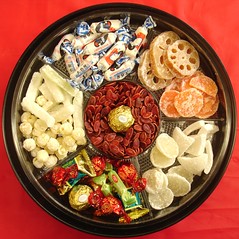
Chinese New Year candy trayImage by hale_popoki via Flickr

Try asking yourself some of these questions next time you get those cravings for sweets or fatty foods. Asking questions of yourself in general, is a good way to ensure you're actually conscious of what you're doing, and not acting on impulse.

1.
Will it be more wasteful for me to drop this into the trash, or to store it in the fat cells in my body and then have to use my own energy to burn them up?


2. How does my stomach feel right now? Is it full?

3. If I could extract only the fat/calories in this food and put it in a cup, would I want to slurp it down?

4. Am I craving this because I actually want it, or because it is a physiological attraction of my senses to it? (A physiological desire would be a natural occurrence of which only the senses are in control, whereas an actual wanting is consciously controlled by rational thoughts in the brain. The rational thinking of the brain, despite popular belief, does have the power to trump the senses.)

5. How important is it that I eat this food? How important is it that I do not?

6. How different would my life be if I ate this junk food everyday, compared to if I did not eat this junk food at all?

7. Do my senses really have more control over my actions than my brain does?

8. How will I benefit from eating this, or will I?


Leave a comment and add to the list.
What do you ask yourself when cravings hit? What helps you? What hurts you?

Reblog this post [with Zemanta]

Leia Mais…

Friday, January 30, 2009

Did You Know? #8: Human Cell Replacement.


Every hour one billion cells in the body must be replaced.

Leia Mais…

Thursday, January 29, 2009

Did You Know? #7: Female Sense of Hearing


A female's sense of hearing is usually increased slightly during fertility. This is attributed to the evolutionary necessity to be on the defense while carrying life.

Leia Mais…

Did You Know? #6: The Human Head


The average human head weighs about 8 pounds.

Leia Mais…

Keep Tabs on President Obama with the Weekly Video Address

With all this "change" in the air, and our new celebrity president, politics seems to be becoming more and more popular amongst the youth including popular internet media channels such as Facebook, MySpace and even Twitter.

These tools have evolved far enough to become a great platform to publicize to a younger audience. They're also at a point where they are actually very useful for finding out information about what our administration is doing. Instead of watching the news from the same channel every night and listening to the same editorials and opinions on the radio, it's now easier to get straight to the facts and follow all of this activity via direct internet channels.

The Whitehouse has a blog that is updated a few times a day documenting highlighted events. President Obama has even said that he plans to publish a weekly address online (every Saturday morning) for a brief update on the pressing issues.

If you haven't already checked out these tools, I would highly recommend taking a look around the new and improved White house site which includes a blog, executive orders called, weekly address videos and other fun stuff:

http://www.whitehouse.gov/blog/

This is a good site that consolidates internet coverage of the administration into one convenient place:

http://www.whatisbarackdoing.com/

Follow Barack Obama on Twitter:

http://twitter.com/BarackObama

Leia Mais…

Wednesday, January 28, 2009

Understanding Basic Principles of Physics for a more Efficient Life

Diagram showing a Second Class LeverImage via Wikipedia

In order to fully understand what's going on around us and optimize our lives, I believe that it is essential to have a basic understanding of some principles of physics. Get to know how things really work. Instead of learning by trial and error, if you have some knowledge or understanding of how events might actually turn out, you can probably make better decisions.

I think I see the point.. but what exactly are you talking about? Let's say, for example, you bump into a lamp and it begins to topple over. Your tendency would be to grab it any way you can and save it from crashing to the floor. So you grab the lower portion of the lamp because that is the part that is moving the slowest. (assuming that it is simply falling over by pivoting about a point at the base of the lamp) But the lamp is too heavy and you don't can't generate enough torque in your wrist in time and you only end up lifting the base of the lamp from the table and hurting your wrist in the process.

Had you been able to apply the simple principle of leverage at the moment you took action, you may have realized that a much smaller amount of force would be required to stop the lamp if you tried to catch it by a point further away from the pivot. The image above depicts a "second class lever" which means that essentially the closer you apply force to the pivot point, the more force is required; and the further away you are, the less is required.

There are limitless of scenarios where you can observe the principles of leverage. IE: golf, faucet knobs, eating utensils, your forearm, pushups... etc.

There is enough information on Levers and Leverage out there, that I don't need to get into an entire lesson, I just want to make you aware of how knowing and applying these principles can benefit your life. Do some research on your own at the links below.

Wikipedia:
http://en.wikipedia.org/wiki/Leverage
Hyperphysics:
http://hyperphysics.phy-astr.gsu.edu/hbase/HFrame.html
This one is a white paper on leverage as it applies to biomechanics:
http://www.spinalfitness.com/Demo/effective%20lever%20arms.PDF

Let me know if this makes sense; was it helpful? Is there a situation you can think of where you may have used physical leverage to your benefit in everyday life and not realized it? Is there a situation where, looking back, you could have used leverage to your advantage, and didn't?

Leia Mais…

Tuesday, January 27, 2009

For the Evolution of Communication Between Motorists

The evolution and eventual civilization of human-kind is greatly attributed to the presence of communication between beings. As our communication techniques improve, we become more civilized and able to appropriately deal with various situations and hardships through many forms of communication. Besides the number of words in any given language, there are multitudes of gestures, sounds and expressions that help us to communicate without speaking. In order to have a successful society, and for people to work together, there must be good communication.

Communication major dimensions scheme

Image via Wikipedia

Currently, and for the past 80-90 years we have been building an alternate society within our society, where people dress up like machines with wheels (yes, I'm talking about cars) and eliminate all familiar forms of communication. We had originally included, and since implemented a few methods of simple communication between these vehicles. This was necessary so that people could exist together on the same streets while wielding these 3.000 lb. machines at high velocities and still retain some semblance of order in this highly volatile environment. As far as I can count the very primitive forms of communication we regularly use now are as follows:


Action Translation
Blinker "I'm changing direction"
Hazard lights "Something's wrong" or "Something's important" or "Watch out"
Horn "Watch out" or "Aahh" or "Hello" or "MOVE!"
Break lights "I'm stopping" or "back off"
Flashing headlights "Something's wrong" or "MOVE!" or "turn on your lights" or "dim your lights" or "Go ahead"
Revving engine "I'm ready to go" or "Hey there" or "I will go fast" or "I rock" or "I'm angry"
Spinning tires "I rock" or "I'm angry"
Yelling out the window Generally "I'm angry for some reason, but I can't tell you exactly why because I'm driving."

All of the above mentioned items are EXTREMELY primitive forms of communication and do not allow for any sort of coherent conveyance of thoughts. All of these things are extremely ambiguous and require contextual evaluation of them before translating them. In other words they could each mean many different things depending on a lot of other factors including driver mood or demeanor which is generally undetectable unless the drivers are in close proximity. There are a couple more forms of communication like swerving or speeding, but those are even more ambiguous than those shown above.

Common Chimpanzee  in Cameroon's South Province

Image via Wikipedia

Chimpanzees have many more methods of communication than the above list. Many audible forms include hoots and barks that convey and are understood by others as feelings of "fear", "puzzlement", "enjoyment", "annoyance", "rage", "distress" and "excitment". Already leaps and bounds ahead of todays motorists. Additionally, body language is extensively used among chimps, which is inherently impossible when driving an automobile, but can be related to speeding and swerving amogst other things that I mentioned are very hard to decipher concrete meaning from.

The more cars we add to the streets the more essential it is that we improve this system of communication. It seems that the majority of people, at least in the Northeast US have surprisingly stopped using blinkers, which contribute to a large percentage of the communication between vehicles. Besides being one of the originally designed communication features, it is also one of the clearest concepts for other drivers to interpret.

The automotive industry has obviously made enourmous progress since it's conception. Competition is stiff, improvements are made, and conveniences are added to every model, every year. And recently the stress has been on fuel consumption (which has a great deal of merit these days) but I feel that there is no urgency to address the language barrier between motorists.

How do you feel we can improve communication on the streets to avoid road rage?

Leia Mais…

The Best Invention Since Sliced Bread

Last year my wife and I were given a bread maker. I thought to myself, "Cool, a bread maker". Little did I know...

Generally, the thing I hate about kitchen gadgetry is the uselessness per unit time spent cleaning all of the bits and pieces. This is NOT the case with the bread maker - at least the one we have (The Sunbeam, below). There is ONE bucket thing and one stirring blade (not sharp) to wash when you're done. It's non-stick so it literally takes about 15 seconds to wash both of these things.

The bread it makes is great, (did I mention it makes pizza dough as well?) and it takes ME about 10 minutes to put together a loaf of bread. My wife can do it in about 3 minutes... Then you just set the time you want it to be done for, usually we let it bake overnight so that we can wake up to the smell of fresh bread and have a warm slice in the morning.

No kidding people, this is one of those things (like the Viva Paper Towels) that has changed my life forever.

Leia Mais…